 Let's Chat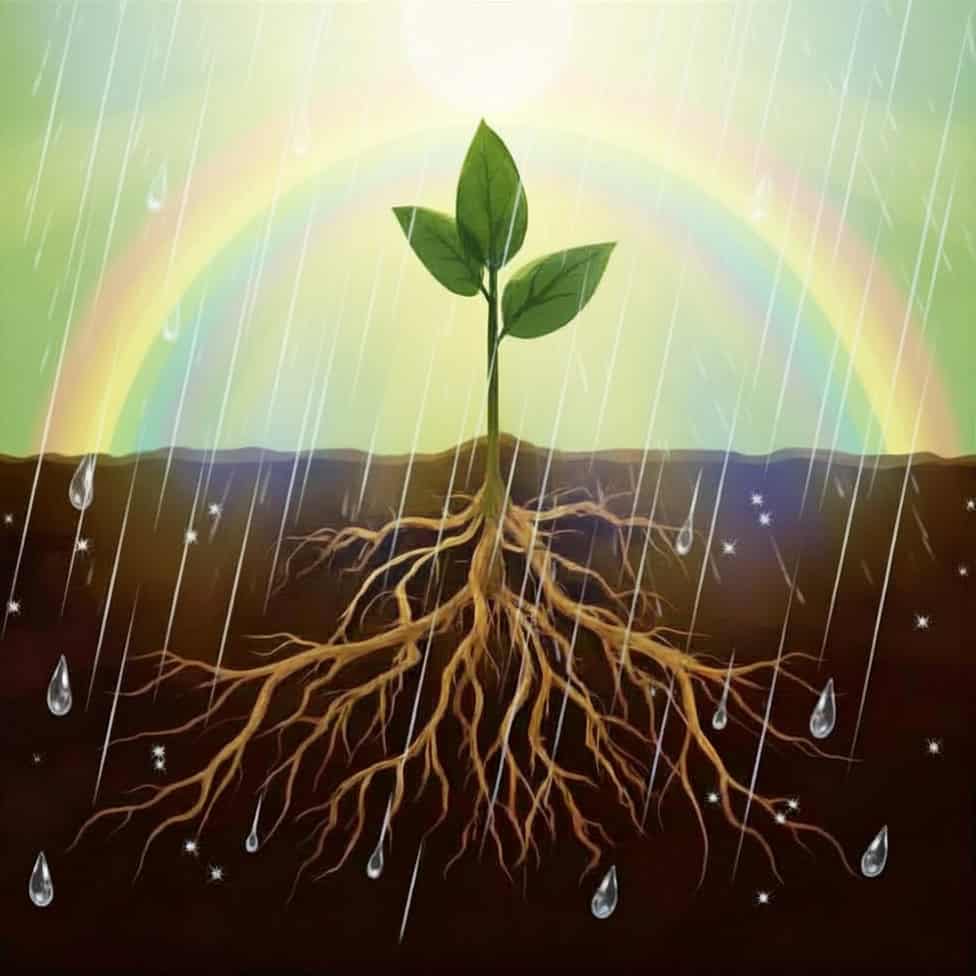
Twenty years ago, when I was 28 weeks pregnant with my youngest son, my mother came to visit our new house. She was a small, woman with a busy mind who was always moving. She arrived in a flourish of gifts and ideas. What she brought that day was a garden.
She brought the seeds, some baby plants, and the tools. We went to work together, side-by-side; digging and planting. I felt the warm sun on my back and my baby boy wiggling in my belly. Rich soil sifted through my fingers, and I could feel its vitality. Three generations linked in the process of creation as my mother and I pressed seeds into the soil to create my very first garden.
I’ve been a gardener ever since.
The mystery and wonder of growing things has never stopped fascinating me. I remember one afternoon, years later kneeling in the dirt and contemplating the miracle of a seed. This one tiny capsule contains everything it needs to build its own habitat and grow a completely new organism. A seed reads the environment and negotiates with the earth. It knows exactly which way to send its roots, reaching deep to find nutrients and water, and which way to send the tender shoots that break through dark soil to open their leaves towards the sun.
The most critical work of the young plant involves building its own vascular system. Much of this takes place under the earth with the development of the root system. Strong plants need strong roots. Weak roots will lead to sickly plants.
Everything grows from the root.
I was 28 weeks pregnant, planting seeds beside my mother while my baby son wiggled and thrived in the rich environment created just for him. Before my belly began to grow or those first flutters of quickening were felt, his placenta was building strong roots to support and sustain his growth.
The story of the placenta is one of the most extraordinary stories in human biology. It deserves to be told with reverence and wonder.
the organ with a history as rich as its biology
In the premodern world, there were a variety of words and concepts for understanding the placenta. Many of these concern its role as “afterbirth,” nachgeburt in German or “the second,” secodine in English. These terms captured the fact that placental expulsion was the “second” part of a childbirth, necessary to end the birth.
The word “placenta” was coined in the 1500’s by Italian anatomist Matteo Realdo Colombo. A placenta was a wide, flat layered cake made of cheese and honey which was prepared in Roman kitchens and presented as an offering to the gods. The term placenta, restored the organ to the domain of mothers by associating it with cooking and childbirth; nourishment and comfort.

The human placenta is a large, flat, circular organ roughly the size and shape of the eponymous “cake”. At full term, it weighs just over a pound, and is dark red with a tree of blood vessels branching like rivulets, mapping every inch of the placenta’s surface. This is why so many cultures through our history have called this the Tree of Life.
The placenta supports the function of the baby’s lungs, kidneys, and digestive system while all of these are developing. It performs gas exchange, delivering oxygen from maternal blood and clearing carbon dioxide from fetal blood. This sustains the baby until they are born and takes their first breath. It draws nutrients, antibodies, and fluids from the mother and transfers them to the baby. It clears fetal metabolic waste into the maternal circulation for the mother’s own kidneys to process. The placenta is an active, living, hormone-producing, immune regulating, signal-sending miracle of creation.
It is remarkable to note that the placenta is entirely of fetal origin. Even while MotherBaby shares a body, the fetal and maternal blood never mix. They exchange oxygen, nutrients, and waste products across a selectively permeable membrane. Although they are deeply connected, the maternal and fetal systems remain entirely separate. The fetal heart pumps blood to the placenta through the umbilical arteries and blood flows back through the umbilical vein. The placenta is the interchange between two circulatory systems that remain distinct, but are also completely interdependent.
The umbilical cord is the tether that connects baby to their placenta. It is a cord of three strands: Two arteries carry deoxygenated blood and waste products to the placenta. These spiral around a vein which returns an enriched blood supply to the baby’s heart to nourish the body. Meanwhile, the placenta reshapes the mother’s cardiovascular system, immune function, and hormonal chemistry. The pregnancy doesn’t happen to the placenta. The placenta defines the pregnancy in the most fundamental, biological sense.
A note: Cultures around the world have long honored the placenta as something sacred. People have buried it, named it and marked its passage with ceremony. I’ll be writing a dedicated post on placenta traditions, folklore, and what to do with the placenta after the birth. It’s a rich and beautiful topic that deserves its own space. For now, what I want to give you is the biology – because I think when you understand everything this organ does, you’ll understand why people have always sensed that it deserved more than a biohazard bag.
how the placenta builds itself: the science is the miracle
germination: the implantation moment
Six to ten days after conception, the embryo arrives at the uterine wall and begins to burrow in. This is implantation – quiet, consequential, and the moment that defines the pregnancy.
Like a seed, the embryo splits open. Then the outer layer, the trophoblast, begins to form what will become the placenta. From the very beginning, the placenta develops faster than the baby in the same way that roots develop before visible plant growth is seen above the ground. The placenta forms the foundational infrastructure; the transit system for raw materials must be put into place to supply the project of building a baby.
the spiral artery transformation: the miracle underground

Spiral arteries are small, coiled blood vessels threaded through the uterine wall. In their natural state, they are narrow, high resistance and designed to support the non-pregnant uterus. These are the soil’s existing irrigation channels. These channels are designed to support normal physiology, but they are far too narrow to supply the exponential growth of new human life.
A seed at the point of germination does not simply accept the soil as it finds it. It changes the soil, releasing acids that break down minerals, and enzymes that shift the chemistry around it. It sends out a whole invisible pharmacy of hormonal signals that re-create the environment to meet the demands of the growth ahead. The seed works to build access to resources to support its own development. Like a growing child, the seed does not wait for its world to be ready. It makes the world ready.
Likewise, placental trophoblast cells don’t just tap into the spiral arteries. They remodel them. Placental cells assimilate with the arterial walls, stripping away the muscular lining. They replace the artery’s own tissue with placental tissue. They transform what were narrow, reactive, high resistance vessels into wide, passive, open channels. The diameter of these channels increases five to ten times. These narrow rivulets become rivers, pouring a continuous flood of oxygen and nutrient-rich blood into the developing placenta. These rivers flow around the clock, without interruption.
The placenta has rebuilt its own blood supply from the inside out.
The root system of a young plant establishes itself in darkness before the first true leaves appear above the ground. Likewise, the placenta’s vascular architecture builds itself in the first trimester or it is not built properly at all.
Strong roots. Strong plant. Everything grows from the root.
the endocrine role of the placenta
The placenta is among the most sophisticated endocrine organs in the human body – even before it is fully developed.
By around week ten, the placenta takes over progesterone production from the corpus luteum, producing far more than the ovaries are capable of. This increased progesterone sustains the pregnancy, softens ligaments, quiets the uterine muscle, and prepares the body for nine months of growth.
The placenta produces estrogen in quantities that reshape the mother’s entire cardiovascular system, expanding her blood volume by 40 – 50 percent to meet the baby’s accelerating demands.
The placenta produces human chorionic gonadotropin (hCG), the hormone detected by pregnancy tests. This signals to the mother’s body that a pregnancy may be underway before she may even know it herself.
The placenta also produces human placental lactogen which begins the process of preparing the mother’s body for lactation months before the baby is born.
And that is how the MotherBaby dyad is sustained by a single organ – through ongoing, extraordinary negotiation.
the immunological miracle
The baby nestled in the womb is a unique and distinct creature with a genome that the mother’s immune system has never encountered. By every principle of immunology. the pregnancy should be rejected the way the body rejects an incompatible organ transplant.
But it isn’t.
The placenta modulates the Mother’s immune response to protect the baby without leaving the mother defenseless against true pathogens. Yet, somehow, the placenta still has the intelligence to transfer maternal IgG antibodies to the growing baby. This is the first gift of immunity, the beginning of a legacy of protection that lasts for months after birth while the baby’s own immune system matures.
the signal system – how the placenta speaks
The placenta is not a silent organ. The complex negotiations between mother and baby require quite a bit of conversation. The placenta communicates through growth factors, angiogenic signals, inflammatory messengers, and hormonal cues. It maintains a detailed conversation about the health of the pregnancy, the needs of the baby, and the capacity of the mother’s body to meet those needs.
One of the most important of these signals is Placental Growth Factor (PIGF). Placental growth factor keeps maternal blood vessels healthy, open, and responsive throughout pregnancy. When the placenta is thriving, PIGF is abundant. When it is struggling, PIGF declines. Falling PIGF levels is one of the earliest detectable signals that something is changing underground, and this can be observed weeks before any symptoms occur.
Emerging knowledge of placental hormone signaling and other biomarkers may offer a new tool to detect placental pathology which can lead to preeclampsia, preterm birth, low birth weight babies, and pregnancy loss. Researchers are exploring new testing options which may give us a glimpse at the health status of the root system so we can pursue early interventions for patients at risk.
the midwife’s view: reading the story after birth

At every home birth, after the baby is in arms, when the cord has finished pulsing and has been cut by a family member, the placenta gets its moment in the spotlight.
I examine it carefully, while the family watches. I estimate its weight. Is it lighter or heavier than expected? I look for color – a deep healthy red shows good perfusion. I look for paler areas or calcifications which reveal how the pregnancy worked to sustain itself. I examine the cord insertion. Is it central, marginal, or velamentous? I show the blood vessels spreading from the cord insertion point across the surface of the placenta, the “Tree of Life” which sustained the baby. The placental exam is not just a clinical assessment, it is reading the story of the pregnancy.
Home birth gives us something hospital birth rarely does: Time. Time in the form of moments to stop and wonder. Time to look. Time to be present. Time to show the family the organ that grew alongside their baby, that made their baby possible, and that is now completing its extraordinary work.
the garden comes full circle
My son is grown now. He has no idea how his story and mine are so closely intertwined. He wouldn’t know how an afternoon planting seeds for a garden became the philosophical lense through which I have come to understand pregnancy, child birth, and so much more.
Every spring I still put seeds in the ground, and I wonder about the miracle of creation. The sun warms my skin. The soil filters through my fingers. I contemplate the immense potential of one tiny seed.
The garden starts with rich soil
The soil takes the seed.
The seed begins to grow.
The most critical work happens underground, before anyone is watching.
Everything grows from the root.

Cynthia M. Bean
HOMEBIRTH MIDWIFE
Cynthia (she/her) is a mother, midwife, herbalist, fitness enthusiast, philosopher, seeker, and adventurer. Cynthia has held space for hundreds of families who have found their power and creativity through their birth journey. Cynthia currently owns a home birth midwifery practice near Uxbridge, MA, and in her free time enjoys cycling, hiking, gardening, and traveling to visit her three adult children.